
About us
Lingwell didn’t begin as a technology company.It began by listening.
Lingwell is a guided conversation that helps people listen to their own language. It starts from a simple observation: how we name what happens to us shapes how we carry it. When people find words that fit, they can understand an experience more clearly, say it to someone who matters, and decide what comes next. Individuals use Lingwell on their own, and clinics, universities, and community organizations offer it to the people they serve.
Where Lingwell began
Before there was Lingwell, there was the work.
Lingwell came from an unlikely place. Its founder, Matthew Leavitt Brown, is a poet, and he did not come to health technology by the usual route.
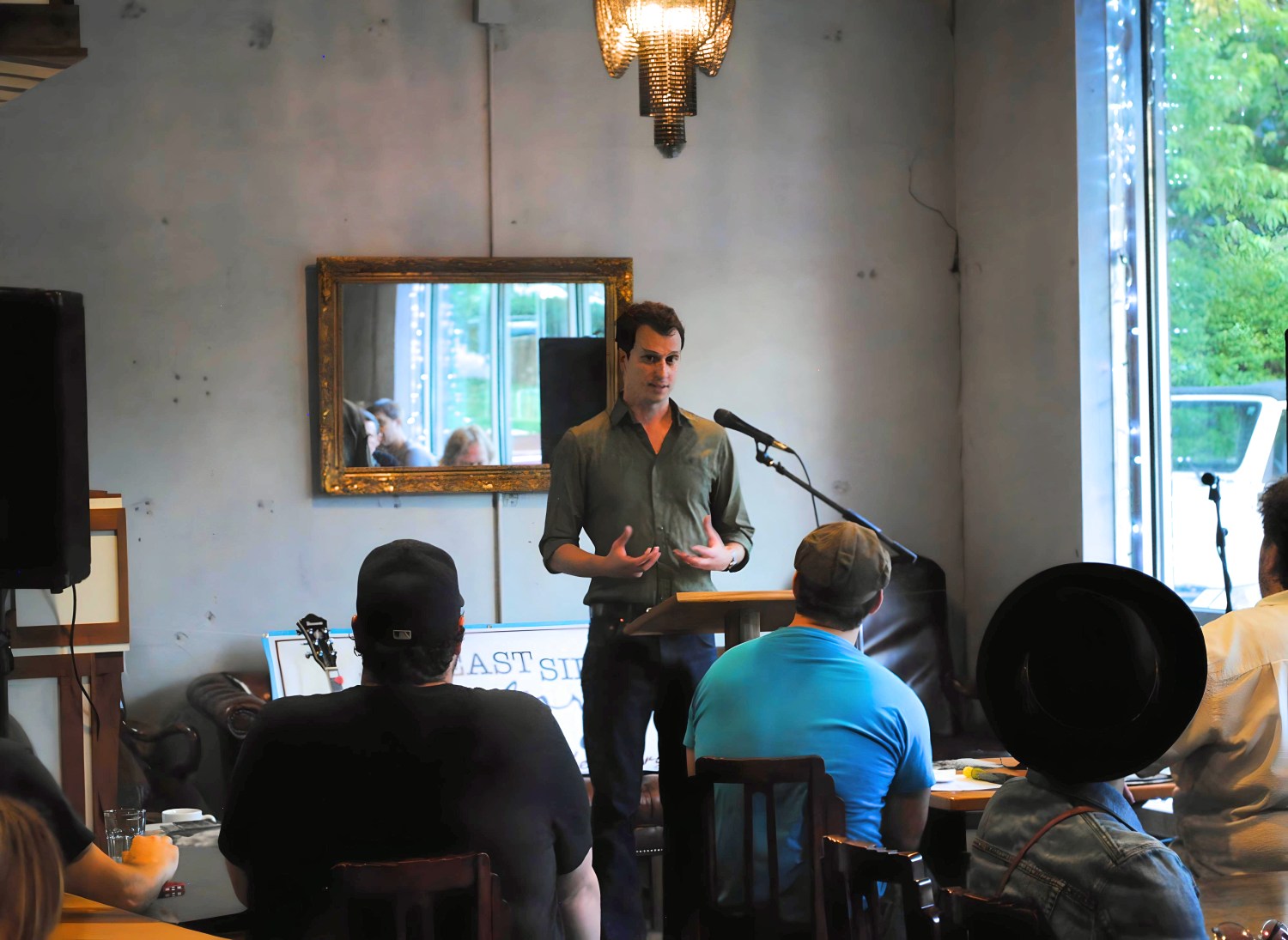
In 2009 he began teaching English at Middle Tennessee State University and started Writer Corps, a writing group for veterans coming home from Iraq and Afghanistan. It was not therapy. Members gathered around words, and as they found language for what they had been through, pain, memory, and experience began to shift.
The work moved into shelters, refugee and immigrant communities, prisons, hospitals and cancer wards, and he completed a PhD in writing and language studies to understand why it worked. Everywhere the pattern held: when people have a structured way to use language, they can begin to change their relationship to their own experiences.

From the work to Lingwell
The work needed to travel.
In 2020, the pandemic ended the in-person groups, along with grants that would have taken the work further: teaching medical empathy and working directly with providers at the VA on bedside manner. Around the same time, its founder became seriously ill and experienced the health system from the inside, with its fear, powerlessness, and isolation. The work could not remain something that only happened in a room.
Working with Vanderbilt University’s Center for Innovation, and through the National Science Foundation’s I-Corps program, he began to see how the method could be carried further: as a digital tool, available to people when and where they need it. He and a small but dedicated team began building it.
The method came first
Lingwell is not a technology.
It is a method, built over years of work with language and human experience, that technology now makes it possible to offer to far more people, in the moments when finding the right words matters most.
It was shaped by the voices of the nurses, teachers, veterans, and survivors it was built for.

Our approach
The words belong to you.
Lingwell does not tell anyone what they feel, diagnose what they are experiencing, or hand them an answer. It makes room to slow down, look more closely, and find the language that fits.
No one experiences the world directly. People experience their experience of it, and language shapes that experience. So when something is hard to carry, the way forward often begins with new words. Lingwell guides people through that: noticing what is there, exploring it, naming it, and carrying it into the conversations that matter. The person remains the authority on what fits.
The approach draws on expressive writing, narrative medicine, cognitive linguistics, and trauma-informed practice, and on years of conversations with the people it was built for.
Built for trust
Trust has to be earned.
Lingwell asks people to explore experiences that can be personal and hard to put into words, and it takes that responsibility seriously.

Private by design
Organizations can offer Lingwell without access to the private conversations people have inside it.
Shared on your terms
If someone wants to bring something into another conversation, with a clinician, counselor, or someone else, they choose to share a summary.
Clear boundaries
Lingwell supports reflection and personal insight. It does not diagnose and does not replace professional care.
Who is behind Lingwell
Built by people who believe words matter.
Lingwell was founded by Matthew Leavitt Brown, PhD, a poet, language scholar, and interdisciplinary artist, and the founder of the Center for Linguistic Health, of which Lingwell is the primary current initiative. He leads the work alongside a growing group of collaborators across language, healthcare, education, community work, user experience, and technology.
Why we’re here
What we’re working toward.
Mission
Lingwell exists to treat language as a central tool for care: to help people process, reframe, and respond to what life brings, with tools rooted in language and grounded in well-being.
Vision
A world where everyone has access to the clarity, support, and communication tools they need, when they need them, made more available, personal, and scalable through language.
Promise
To help people cultivate clarity, connection, and agency, and to begin with what is already within reach: their own voices.
Next step
Helping people find their words.
For clinics & organizations